
The Shoes on the Danube Bank: A Moving Memorial in Budapest
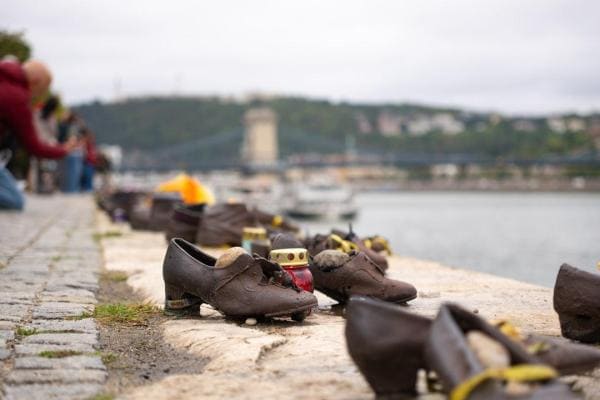
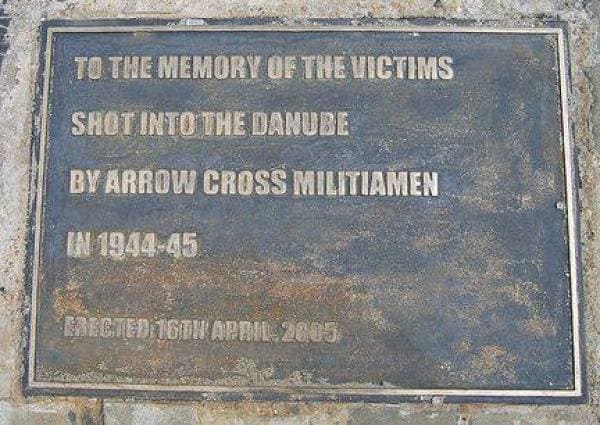
The Shoes on the Danube Bank is a poignant public monument located on the Pest side of the river that honors the victims of the Arrow Cross militia during World War II. As you walk along the stone promenade near the Hungarian Parliament, the grand views of the river suddenly give way to a quiet, somber sight at your feet. Sixty pairs of rusted period footwear are attached to the stone embankment, appearing as if their owners just stepped out of them moments ago. This stark installation serves as a powerful memorial to the Holocaust in Budapest, commemorating the thousands of citizens shot into the freezing waters by fascist militiamen during the winter of 1944 and 1945.
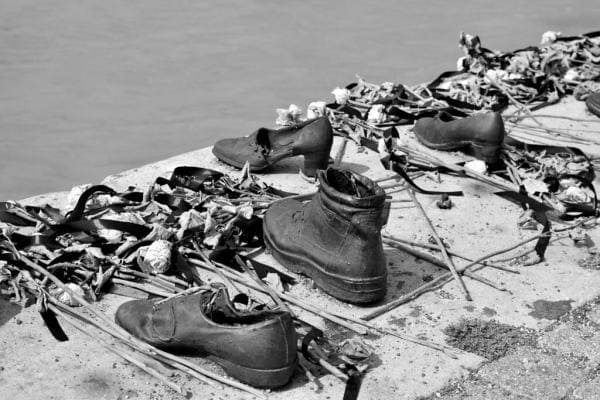
Approaching the edge, you will notice the chilling attention to detail in the sculpture of cast iron shoes created by Can Togay and Gyula Pauer. There are sturdy work boots, women’s heels, and tiny children’s shoes, representing the indiscriminate nature of the brutality. The victims were ordered to remove their footwear—valuable commodities during the war—before facing the firing squads. Looking at the empty shoes against the backdrop of the flowing water, you can almost hear the silence left behind by those who vanished into the current.
Today, the site functions not just as a historical marker, but as a place of active mourning and remembrance. On your visit, you might see fresh flowers tucked inside a hollow boot or small pebbles placed along the rims, following the Jewish tradition of leaving stones on graves. It is a hauntingly simple tribute that connects the beauty of the modern city with its darkest chapter. Standing at this Jewish memorial in Budapest offers a moment to reflect on the fragility of life and the enduring importance of memory in the heart of Europe.