


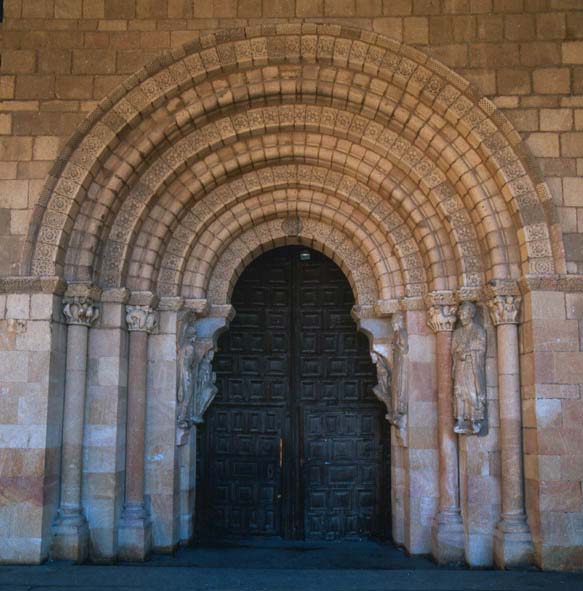


The Basilica of San Vicente dates back to the 12th century, but it was priorly built on a place of worship that is hard to define. The Basilica is a compendium of Romanesque architecture as their construction lasted until the 13th century, additionally bearing traces of the late Romanesque, directly preceding Gothic art.
The inclusion of this monument on the Ávila list of cultural heritage related with the Jews can be put down to the extraordinary reliefs which decorate the cenotaph (13th century), where the remains of the martyrs are kept. These saints were the siblings Vicente, Sabina and Cristeta, and they suffered martyrdom during the persecution of Diocletian (around 360) by refusing to admit they had carried out pagan rites. Tradition would have it that their bodies were laid out on a rock and the first basilica was built at this site. Its construction was paid for by a Jew who had boasted of his martyrdom: when he was gloating over the torture they were being subject to, a snake wrapped around his body. He then repented, converted, and built the church.
The Basilica of San Vicente converted to Christianity, and the Jew went ahead with the erection of this place of worship where he himself would later be buried. Now, the martyrs’ remains are located in urns arranged at the Main Altar, and the cenotaph is admired for its excellent carvings. The Basilica of San Vicente was declared a National Monument in 1882.
San Vicente Basilica
Plan Your Journey
Explore places and experiences that can help shape your personalized travel itinerary.
