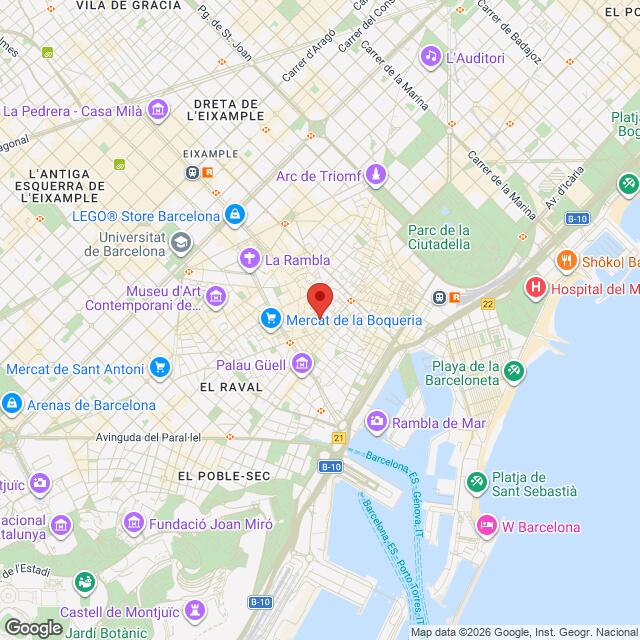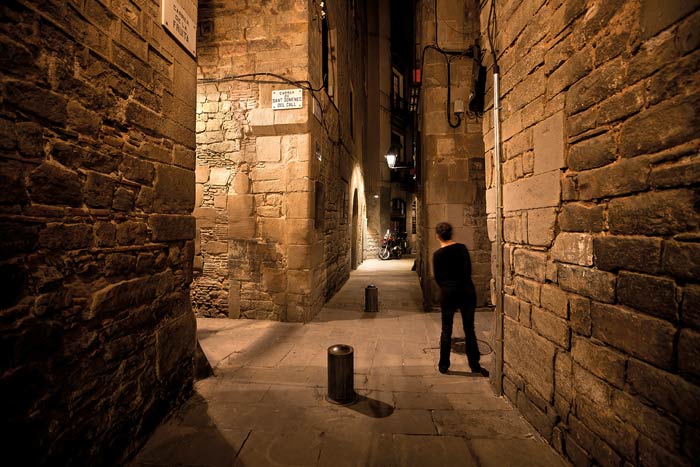
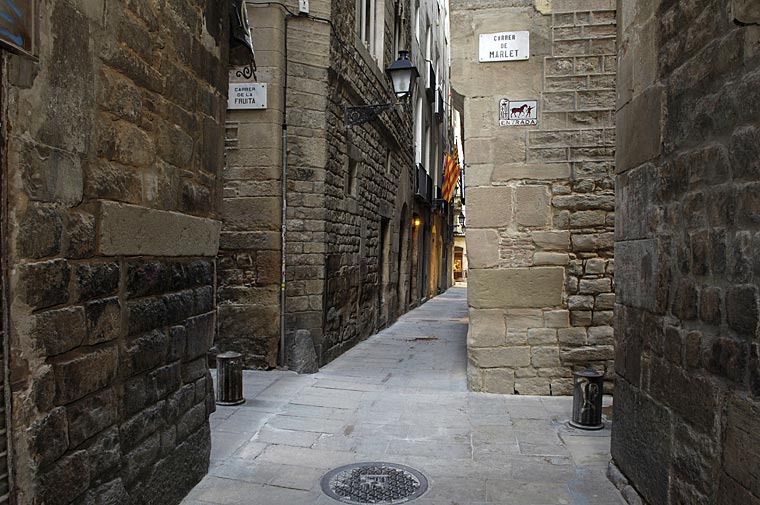
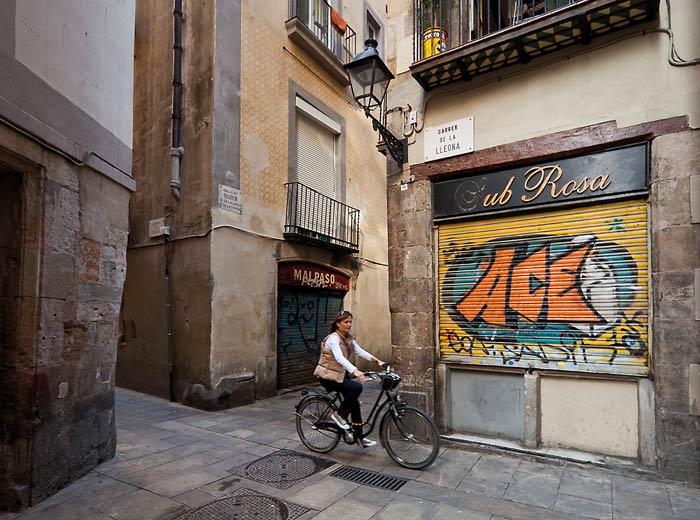
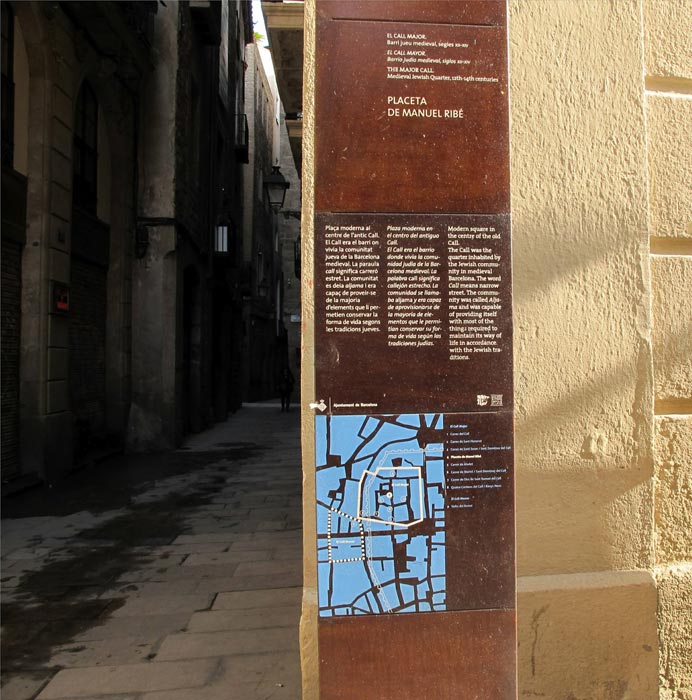
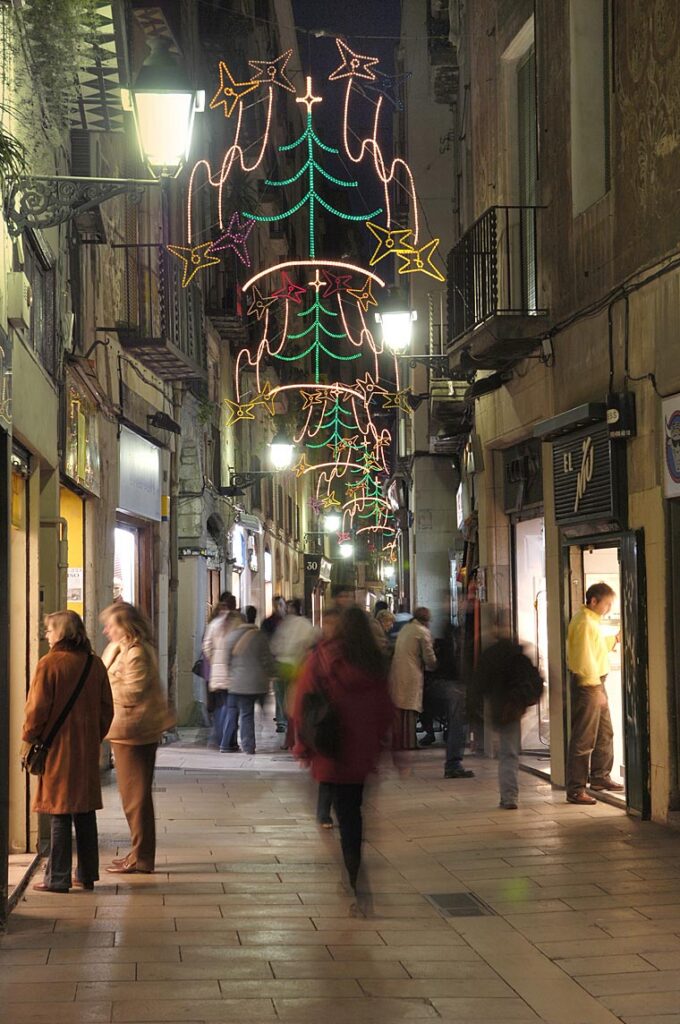
The Jewish Quarter in Barcelona, known as El Call, dates back to the 11th century and refers to the entire set of streets occupied by the Jews. During this time, the municipal authorities had no jurisdiction over the Call as it was directly accountable to the King or the royal bailiffs. From the 14th century, restrictive ordinances for the Jews were issued referring solely to situations or actions outside the Call quarter.
The medieval Jewish Quarter takes up a relatively small area of narrow streets tucked away behind the Cathedral in the oldest part of the city centre. After the 1391 pogroms, the area was largly abandoned even years before the Spanish Inquisition and expulsion of the Jews from Spain.
The Jewish Quarter contains two ancient mikvehs, historic synagogues including the Shlomo Ben Adret Synagogue, which is believed to be one of the oldest synagogues in Europe, as well as the MUHBA El Call museum where one can learn about the Jewish history of Barcelona.
In the middle ages, el Call or Jewish quarter of Barcelona was the largest in the entire Catalan-Aragonese Crown and one of the most important in southern Europe. Initially it occupied the northwestern quarter of the old urban fabric of Barcino. In the more peripheral areas, both Christians and Jews lived together, and the limits were not entirely precise.
The oldest documentary mention of the Jewish presence in Barcelona dates from 875-877, although it is assumed that the Jews settled during the first centuries of the Christian era. At the end of the 11th century, the Callo or Jewish quarter had already been formed. It was a closed and delimited neighborhood, the territory of which was excluded from the parish network of the city. Within the quarter there were synagogues, ritual baths and other institutions that guaranteed the practice of Judaism.