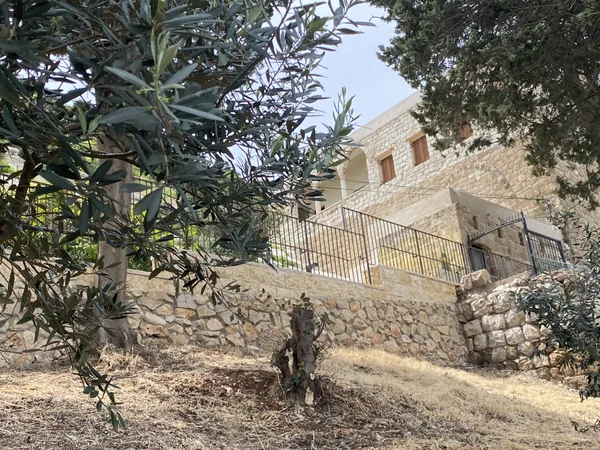

A Journey to the Cave of Elijah in Haifa
The Cave of Elijah is a natural limestone cavern set into the northwestern slopes of Mount Carmel, functioning as an active prayer space and a shared holy site for multiple faiths. Situated about 40 meters above sea level in Haifa, the cave was expanded by ancient quarrying and has drawn pilgrims for centuries. In Jewish tradition, this is the shelter where the Prophet Elijah hid from Queen Jezebel and prayed before his confrontation with the prophets of Ba’al.
As you enter the subterranean space, you’ll find a cavern measuring approximately 14 meters deep and 8 meters wide. Stone benches carved directly from the limestone in antiquity line the walls. Almost 200 ancient inscriptions in Greek, Hebrew, Latin, and Arabic, dating primarily from the 1st to the 6th centuries CE, mark the walls as evidence of early devotion. Today, the interior is illuminated by candles and oil lamps, with a velvet curtain dividing the main cavern into separate prayer sections for men and women.
While deeply significant in Jewish tradition, the site is a rare example of a continuously shared sacred space. It is also venerated by Christians, Muslims, and the Druze. Christians revere the site’s connection to Elijah, a spiritual patron of the Catholic Carmelite Order. In Islamic and Druze traditions, Elijah is often identified with Al-Khidr, a symbol of water and eternal life.
Historically, the cave has served as a spiritual healing center. A long-standing local custom involves bringing individuals suffering from physical or emotional ailments to the cave, hoping for a cure through the prophet’s merit. A visit offers a chance to observe this ongoing tradition of faith and reflection on Mount Carmel.
