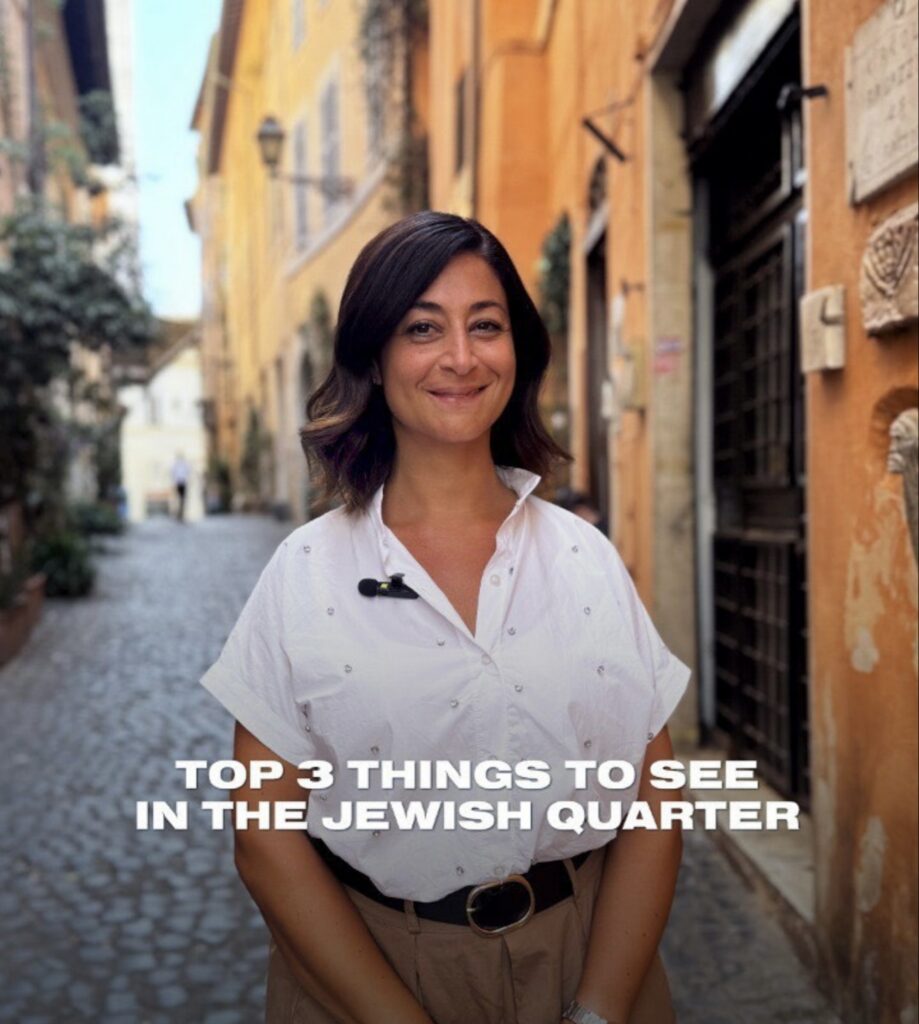

July 14, 1555, Pope Paul IV decreed that all Jews in the Papal States must be segregated into an enclosed neighborhood, which he called vicus. The first term used by the Roman Jews to refer to this neighborhood/quarter was called seraglio. In fact, the first time the word ghetto ever was documented in an official document by a Jewish notary in Rome was not until 1589; he referred to the area as “Il nostro ghet” (our ghetto).


Viviana from the Jewish Museum of Rome highlights the three top things to see in Jewish Quarter of Rome, former ghetto. An excellent point of reference to learn about the tradition, religion, culture and the two-thousand-year-old history of the Jews of the Eternal city, one of the oldest communities of the world, pre-dating Christianity.
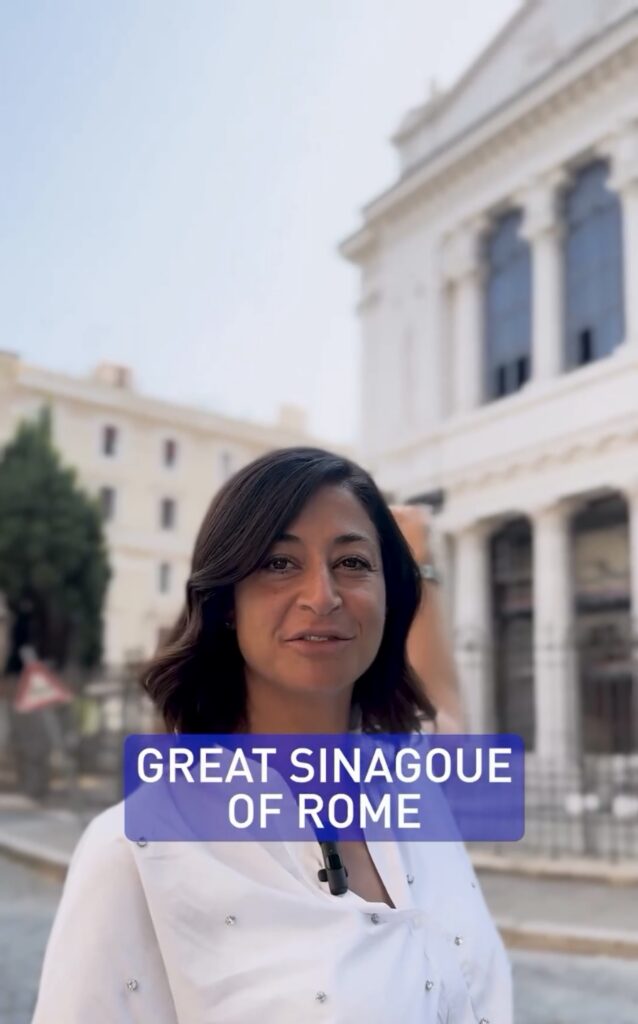
The Great Synagogue of Rome
What makes the Great Synagogue (Tempio Maggiore) one of the “must see sites “in the eternal city?
Image From Brenda Lee Bohen InstagramViviana:
It is a symbol of the emancipation of the Jewish community of Rome and is the heart of the community today. It Represents the freedom after 315 years of being closed in a ghetto. I feel that the structure, the different rite, the melodies, the prayer shawl of the rabbi, all is made in a way to preserve the originality and uniqueness of the oldest Jewish community of Europe.
Le Cinque Scole
What is the importance of the five synagogues: Tempio, Nova, Siciliano, Catalano e Castigliano?
Image From Brenda Lee Bohen InstagramViviana:
The papal bull Cum nimis absurdum, issued in 1555 under the papacy of Paul IV, clearly stated that every ghetto present in the Papal States was allowed to posses no more than one place of worship: “Et in singulis Civitatibus, Terris & locis, in quibus habitaverint, unicam tantum Sinagogam in loco solito habeant nec aliam de novo construere, aut bona immobilia possedere possint”.
In Piazza Mercatello, later renamed Piazza delle Cinque Scole, there were five synagogues in one building, in order to preserve the different traditions of the Roman Jews and the Sephardi rite of Jews expelled during the Spanish Inquisition. The building was le Cinque scole: the Scola Castigliana, the scola Catalana, the scola Siciliana, the scola Tempio and the scola Nova. They remained there until 1908, all under one roof as if they were a single place of worship.
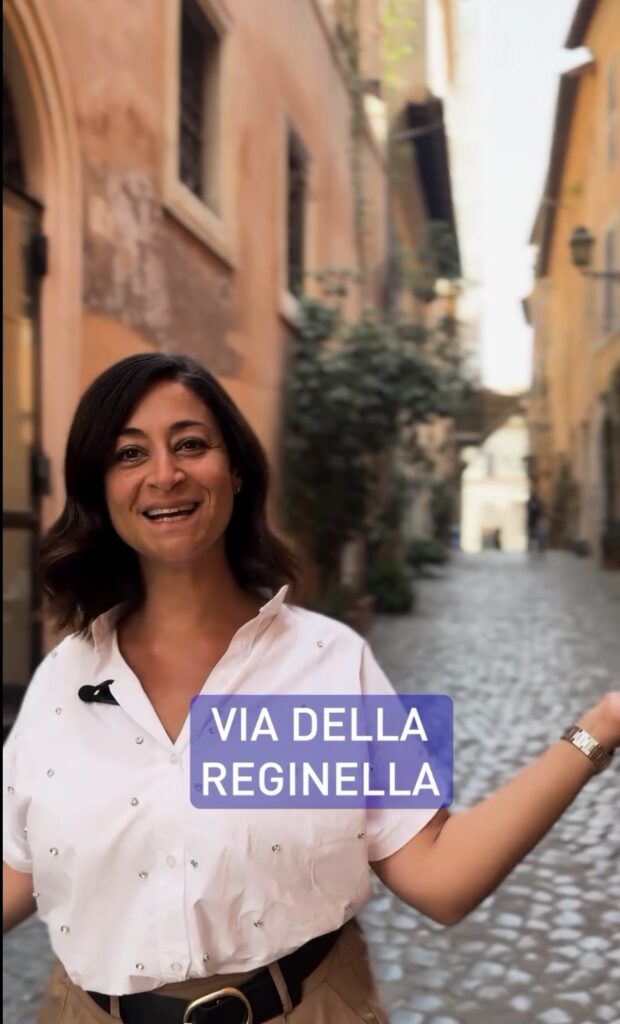
Via Della Reginella
What is one of the main highlights (out of many) would you like to share about this street called today, Via della Reginella?
Image From Brenda Lee Bohen InstagramViviana:
On my walk I show you the marble frame of an ancient portal, now walled up, located on Via della Reginella: this is the original main entrance to the oldest part of Palazzo Costaguti, the building where my mother in law’s family was hidden during the nazis occupation. On this famous street, where you still feel the atmosphere of the original ghetto, you can clearly see the expansion of the Ghetto led to the movement of the entrance to the building outside the confines of the “serraglio”, that leads to Piazza Mattei. The origin of the name “Reginella” is somewhat uncertain: it has been suggested that it takes its name from the ancient “Temple of Juno Regina” (which stood in the immediate vicinity, between the Portico of Ottavia and Via della Tribuna di Campitelli).
For more information: