Walking the Historic Walls of the Old City
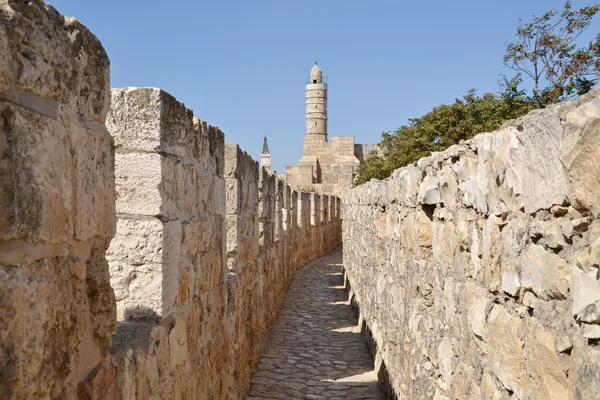
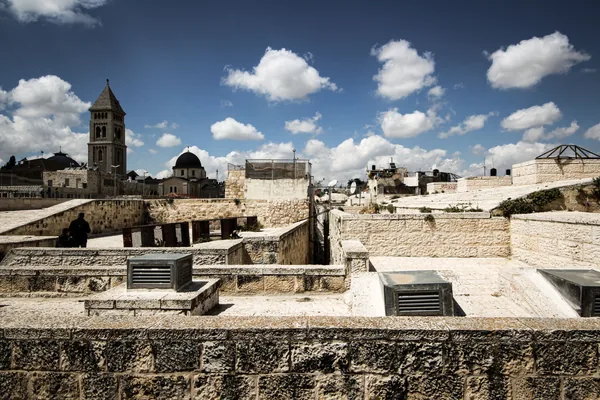
The Ramparts of the Old City of Jerusalem offer an elevated stone pathway that completely encircles the historic center, forming a physical boundary between the ancient neighborhoods and the modern metropolis. As you step onto the narrow upper walkway, you are tracing a four-kilometer circuit that averages 12 meters in height. From this vantage point, you can look down into private courtyards, bustling souks, and residential rooftops across the Jewish, Christian, Armenian, and Muslim quarters.
The current golden limestone fortifications were constructed between 1537 and 1541 by order of Ottoman Sultan Suleiman the Magnificent. As you walk the uneven stone steps past defensive arrow slits and 34 watchtowers, you will notice remnants of earlier eras, including reused Crusader stones and ancient chisel marks. Beneath these 16th-century structures lies a deep record of regional archaeology, with excavations revealing foundations stretching back to the Bronze and Iron Ages, such as the massive Hasmonean wall near the Tower of David.
The elevated route is divided into two sections starting near the Jaffa Gate. The Northern Route stretches toward the Lions’ Gate, passing over the Christian and Muslim quarters, while the Southern Route leads past Mount Zion to the Dung Gate, traversing above the Armenian and Jewish quarters. Along the eastern edge, you can view the sealed Golden Gate, a site holding deep significance across traditions. Jewish tradition anticipates it as the entrance for the Messiah, while Christian memory associates it with Jesus entering the city on Palm Sunday. Looking outward from the stone parapets, the Mount of Olives and the Kidron Valley stretch into the distance, grounding the city’s complex heritage in the surrounding landscape.